
Girls Leading Climate Action: GLACC’s Impact in Rwanda
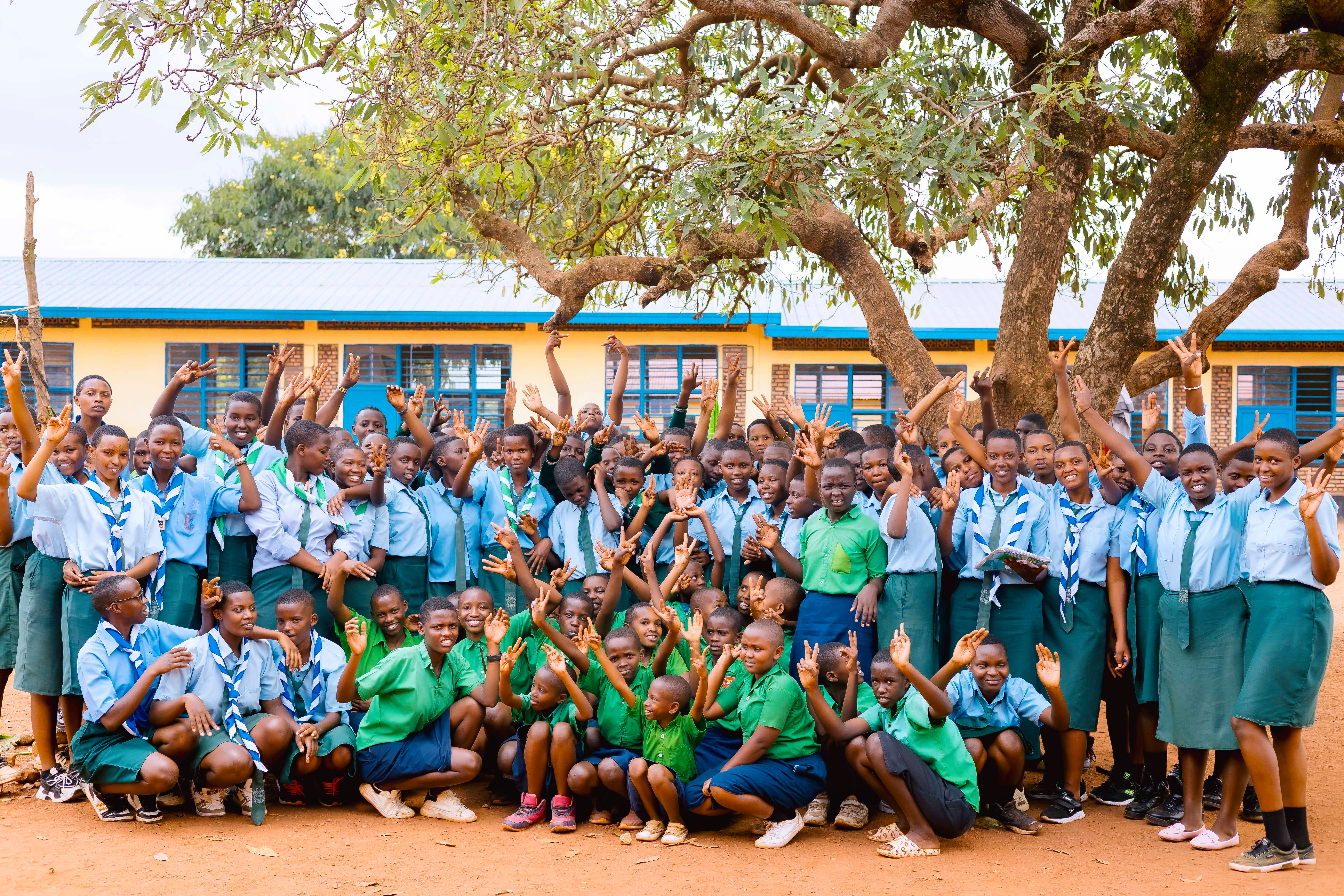
Through the Girl-Led Action on Climate Change (GLACC) project, the Association des Guides du Rwanda (AGR), in partnership with the World Association of Girl Guides and Girl Scouts (WAGGGS), has made great progress in enabling girls to take the lead in climate action. Since its inception in July 2023, the program has empowered young girls to address climate challenges and inspired their communities to take action.
Expanding Reach and Building Leadership
GLACC has already made remarkable progress across 10 districts: Kayonza, Nyanza, Muhanga, Huye, Nyamagabe, Nyaruguru, Rulindo, Ngororero, Rutsiro, and Karongi.
Through capacity-building training, we provided 14 Trainers of Trainers (ToTs) ,100 adult troop leaders and from 50 schools with the information and skills they needed related to climate change to continuously mentor, guide, and support the girls in their programs.
Girls have been participating and achieving several things to date over fourteen thousands of girls have enrolled in the GLACC curriculum. Out of these, over eleven girls successfully completed the curriculum, gaining valuable knowledge on climate change, leadership, and advocacy. This reflects a strong level of commitment and achievement among the participants.
The program has a broad impact on the community as well. The program has reached and positively impacted more than thirty-two thousand community members via the active participation of girls in advocacy, awareness campaigns, and outreach projects. Through these initiatives, local communities have seen an increase in awareness, a shift in perspective, and a promotion of sustainable habits.
Advocacy at the Core
The programme places young leaders at the forefront of climate advocacy. Through the World Association of Girl Guides and Girl Scouts (WAGGGS), 20 young leaders were trained as Advocacy Champions, equipping them with the skills to design and implement campaigns addressing climate challenges in their communities. To date, 6 regional advocacy strategies have been developed, resulting in 5 successful campaigns in Nyanza, Nyamagabe, Karongi and Rulindo. These initiatives expanded access to climate change information through community meetings, youth centers, and radio programs. This information will be passed through discussions in community gatherings and youth centers, just to ensure that people are well-informed and able to contribute meaningfully to climate solutions.
On the international stage, Advocacy Champions proudly represented AGR and the World Association of Girl Guides and Girl Scouts at COP28 (Shimo Ikaze Faustine) in 2023 held in Dubai and COP29 (Nancy Hortance Kabagambe) in 2025 held in Azerbaijan.
Driving Community Solutions
The curriculum also includes a Community Action Project component, designed to encourage practical engagement and real-life impact. So far, 15 troops have been awarded small grants to design and implement meaningful initiatives within their communities.
These projects focus on raising awareness and contributing to climate solutions, ranging from tree planting campaigns to the creation of innovative crafts made from recycled organic and non-organic materials. While small in scale, these initiatives play a valuable role in fostering environmental responsibility, creativity, and sustainable practices among young people.
By empowering troops to take action, the program ensures that girls not only gain knowledge in the classroom but also become active change-makers in their communities, directly contributing to a greener and more sustainable future.
Through a Solution Lab event, GLACC supported these troops to re-design and implement community action projects addressing local climate-related challenges. These projects demonstrate how empowering young girls can generate innovative solutions for their communities.
GLACC also joined World Environment Day celebrations, showcasing the growing role of girls in driving sustainable change. As the program continues, it is clear that empowering girls to lead is not only transforming their lives but also shaping a greener and more resilient future for Rwanda.
The program has consistently achieved remarkable results, demonstrating its effectiveness and lasting impact. With the growing number of trained leaders, the high completion rate of girls enrolled in the curriculum, and the wide-reaching influence on communities, the initiative has proven to be both sustainable and transformative. These achievements highlight its role as a powerful model for empowering young people, strengthening community networks, and driving positive, long-term change.